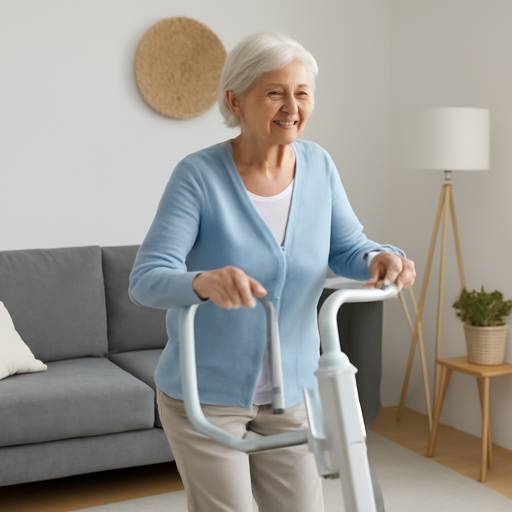
Regain Independence at Home: The Complete Guide to Sit to Stand Lift for Home Use
PaulMYork,
For millions of individuals recovering from surgery, managing chronic conditions, or experiencing age-related mobility decline, the simple act of standing up can become a monumental challenge. The transition from sitting to standing is one of the most physically demanding movements for both the patient and the caregiver. Traditional transfer methods often lead to pulled muscles, back injuries, and a loss of dignity for the person being moved. This is where a specialized device designed for partial weight-bearing individuals can transform daily life. A sit to stand lift for home use is not merely a piece of medical equipment; it is a bridge to autonomy, safety, and comfort within the familiar walls of one’s own residence. Unlike full-body sling lifts that require complete passivity, these devices empower users to actively participate in their own transfer, leveraging their existing strength while providing essential stability. This article dives deep into the mechanics, benefits, and real-world applications of these invaluable aids, helping you understand why they have become a cornerstone of modern home care.
Understanding the Mechanics and Core Benefits of a Home-Based Sit-to-Stand Lift
The fundamental principle behind a sit to stand lift for home use is biomechanical efficiency. Unlike a standard wheelchair lift or a ceiling track system, these devices work with the user’s natural movement patterns. The lift typically consists of a stable base with locking casters, a vertical mast, a knee pad, and a pivoting arm that holds a sling or vest. When a user is seated on a chair, bed, or toilet, the lift is positioned in front of them. The user places their feet on the footplate, and the knee pad gently locks their knees in place to prevent the legs from sliding forward. The user then grasps the handles or a trapeze bar, and the lift mechanism—either powered by a rechargeable battery or, in some cases, a manual hydraulic system—slowly raises them to a standing position. The key distinction is that the user bears weight through their own legs, helping to maintain muscle tone and circulation.
This active participation is critical for rehabilitation. Physical therapists often recommend these lifts because they encourage weight-bearing and proprioception—the body’s ability to sense its position in space. For a patient recovering from a hip replacement, standing with the assistance of a lift can significantly accelerate bone healing and prevent muscle atrophy. From a caregiver’s perspective, the advantages are equally profound. Manual lifting of even a slightly mobile patient exposes the caregiver to enormous shear forces on the lower back. A study by the American Journal of Nursing reported that healthcare workers who frequently perform manual transfers have a 50% higher risk of developing chronic back pain. The sit-to-stand lift virtually eliminates this risk because the caregiver only needs to guide the lift controls and ensure proper foot placement. The mechanical advantage is immense—one caregiver can safely transfer a patient weighing over 300 pounds without straining a single muscle. This not only reduces injury-related downtime but also makes home care sustainable for family members who are often untrained in proper body mechanics.
Another often-overlooked benefit is the psychological impact. Patients who can stand, even with assistance, report higher levels of self-esteem and a greater sense of control over their environment. The device allows for more frequent position changes, which reduces the risk of pressure ulcers and improves respiratory function. When selecting a unit for home use, portability and storage become important factors. Many models feature foldable frames and detachable components that can be stored in a closet or corner. Battery-operated units offer hours of use per charge, and the intuitive controls are often designed for one-handed operation. The modern sit to stand lift for home use is engineered to blend into a domestic setting without appearing overly clinical, yet it delivers hospital-grade reliability. The link between consistent standing transfers and improved clinical outcomes is well documented. By integrating this tool into daily routines—for morning bathroom visits, meal times, or simply moving to a living room chair—caregivers can break the cycle of prolonged bed rest that so often leads to hospital readmissions.
Real-World Applications: Choosing the Right Lift and Integrating It Into Daily Life
A common misconception is that any sit-to-stand lift works equally well for all home environments. In reality, the specific layout of a home—width of doorways, type of flooring, and height of furniture—dictates which model will be most effective. For example, a bariatric lift with a wider base may be necessary for users over 350 pounds, but that same base might not fit through a standard 32-inch bathroom door. This is where a thorough assessment becomes crucial. Many home care providers and occupational therapists recommend measuring every doorway, corner, and turning radius where the lift will travel. Some models offer power-adjustable base widths that can be narrowed for passage and widened for stability during the lift. The knee pad height should be adjustable to match the user’s leg length, and the footplate should accommodate standard footwear.
To illustrate the real-world impact, consider the case of Margaret, a 78-year-old retired teacher living alone with severe osteoarthritis in both knees. After a fall sidelined her for three weeks, her daughter became her primary caregiver, commuting three hours each day. The manual transfers were exhausting and dangerous for both women. Using a sit to stand lift for home use, Margaret was able to stand independently from her recliner and walker to her wheelchair. Within two months, she was no longer homebound—she could visit her garden, attend church, and even go for short walks with the lift acting as a safety net. The device was not just a transfer aid; it became a rehabilitation tool that rebuilt her confidence.
Another critical sub-topic is the integration of these lifts with existing home medical equipment. Many users combine a sit to stand lift for home use with an elevated toilet seat, a bedside commode, or a power wheelchair. The lift can be used to transfer from a bed to a reclining wheelchair, then later to a toilet, all without the need for multiple caregivers. Some advanced models include a digital scale integrated into the footplate, allowing caregivers to monitor weight changes without moving the patient to a separate scale—a crucial feature for patients with congestive heart failure or those on diuretics. In homes with tight budgets or limited space, rental programs are available from medical supply companies, often allowing a trial period before purchase.
A case study from a rehabilitation hospital highlights the downstream savings: a 62-year-old stroke patient who used a sit-to-stand lift at home avoided a $12,000 inpatient rehabilitation stay by performing daily standing exercises supervised by a home health aide. The lift provided the necessary safety margin that made home therapy viable. It is worth noting that not all patients are candidates for this type of lift. Those with severe upper body weakness, unstable fractures, or extreme contractures may require a full-body sling lift. However, for the majority of home users who can bear weight on at least one leg and have some trunk control, a sit-to-stand lift is the superior choice. The key is to involve a physical therapist in the selection process. They can assess the user’s ability to grip, their balance in a seated position, and their tolerance for upright posture. With proper training, a family caregiver can operate the lift safely within a few minutes. The integration of this device into daily routines reduces the number of falls—the leading cause of injury among older adults—by ensuring that transfers are always supported. When matched correctly, a sit to stand lift for home use can last for years, adapting to the user’s changing needs with simple adjustments to the sling and leg rest.
Maintenance, Safety Protocols, and Advanced Features for Optimal Home Use
Owning a sit-to-stand lift at home brings with it a responsibility for routine maintenance that many families overlook. Most units run on sealed lead-acid or lithium-ion batteries, which require periodic charging. It is a common mistake to leave the lift plugged in continuously, which can degrade battery life over time. Instead, manufacturers recommend charging the battery fully, unplugging the unit, and then recharging only when the indicator shows a half charge. The casters must be checked for debris and hair accumulation, as a single piece of string can lock up a wheel, turning a smooth transfer into a dangerous jolt. The sling or vest attachment points—often hooks or loops made of high-density nylon—should be inspected monthly for fraying or wear. Any sign of damage means the sling must be replaced immediately, as failure during a lift can result in a serious fall. Most reputable brands offer replacement slings in multiple sizes, including extra-small for pediatric use and bariatric models with wider support panels.
Safety training is another pillar of effective home use. The U.S. Consumer Product Safety Commission notes that most lift-related accidents in homes happen because the user’s feet are not correctly positioned on the footplate or because the knee pad is too low, allowing the legs to slip. A simple safety drill: before starting any lift, always ensure the base is locked (brakes engaged), the feet are fully flat on the footplate, and the user’s knees are stabilized by the pad at the correct height—typically just below the kneecap. The lift should not be used on uneven surfaces or thick carpet without a rigid board underneath. For added peace of mind, many modern lifts now include anti-tilt sensors that automatically cut power if the lift is tilted beyond a safe angle, and some offer emergency stop buttons that halt movement instantly. Remote controls allow the caregiver to stand beside the user, not behind them, maintaining eye contact and communication throughout the transfer.
Advanced features worthy of attention include power tilting of the seat sling, which helps a user who leans forward too much to achieve a more upright position. Some units now integrate with smart home systems—charging themselves during off-peak hours and emitting a low battery alert to a caregiver’s smartphone. For couples sharing a home, a lift with a weight capacity of 400 pounds can accommodate both partners, making it a shared asset. There is also a growing trend toward modular systems; one family purchased a lift for their mother after a knee replacement, and later adapted the same base unit to assist their father with Parkinson’s disease simply by changing the sling type. The return on investment for these devices is significant when considering the alternative—frequent hospital stays, hiring professional nursing aides multiple times a day, or moving the patient to a nursing facility. The psychological value of staying in one’s own home, surrounded by personal belongings, cannot be overstated. A well-maintained sit-to-stand lift is a reliable partner in aging in place, enabling humans to do what they do best: adapt, overcome, and remain active. The technology continues to evolve, with lighter materials, quieter motors, and more intuitive controls that reduce the learning curve for families suddenly thrust into the role of caregiver. When properly secured and routinely checked, this equipment transforms a potentially terrifying daily struggle into a controlled, dignified process. It is a small machine that delivers a huge measure of independence.